Why Kempenfelt Bay Lots Ask More of Their Trees
Properties along Kempenfelt Bay sit in one of the most demanding growing environments in the Barrie area. The shoreline itself is a moving edge: sand and gravel deposits drain quickly, the bank often falls away at a steep angle, and every winter the open water funnels wind across the lot with nothing to slow it down. A maple that would live comfortably on a sheltered inland street can struggle on a bay-facing slope, and the failure mode is rarely gradual. Limbs shear off, root plates lift, and a tree that looked fine in July is lying across a deck in March.
That combination is why shoreline tree care on Lake Simcoe deserves its own plan rather than a copy of what works two streets inland. Our crews spend a lot of time on these lots, and the same three factors come up every visit: sandy soil that holds roots loosely, slopes that concentrate runoff and erode around trunks, and wind that arrives with a long fetch over open water. Understanding how each one behaves is the difference between a tree that anchors a view and one that becomes a liability.
Trees in Sandy Soil: What Roots Actually Need
Sand drains well, which sounds like a benefit until you watch a dry August. Water moves through sandy soil so quickly that shallow-rooted species spend the summer stressed, and stressed trees allocate less energy to the structural roots that hold them upright. On top of that, sandy profiles along the bay are often thin, sitting over compacted till or rock, so roots spread wide rather than deep. A wide, shallow root system is efficient at collecting surface water but far less effective at resisting a lever force applied at the crown.
For trees in sandy soil, the practical response is to reduce the load the canopy places on those roots. That means structural Tree Pruning that removes weak attachments and long horizontal limbs before they become levers, and it means avoiding anything that disturbs the root zone. Construction, regrading, patio work, and even repeated foot traffic over a root plate can sever the fine roots holding a slope tree in place. When we assess a shoreline property, we look at the ground before we look up: exposed roots, soil cracks, and a lean that has changed since the previous season all tell us more than the canopy does.
Mulching helps more than most homeowners expect. A ring of coarse organic mulch over the root zone, kept clear of the trunk, moderates moisture and temperature in sandy ground and encourages fine root development. It is inexpensive, it does not require a permit, and it is one of the few interventions that pays off every year.
Tree Pruning on Slopes: Access, Balance and Erosion
Tree pruning on slopes is a different discipline from pruning a flat backyard. Working on an incline means every cut has to be planned around where debris will travel, how the climber or lift will be anchored, and whether the bank itself can take the traffic. On the steeper Kempenfelt Bay properties, we often rig limbs down rather than letting them fall, because a section of trunk rolling down a sandy bank does real damage to the understory and can end up in the water.
There is also a horticultural reason to be careful. Trees on a slope grow with a bias: crown weight often leans toward the water as the tree reaches for light, while the root system is anchored uphill. Removing too much from one side in a single visit shifts that balance and can leave the tree exposed to the prevailing wind. A measured approach, spread over more than one season where needed, keeps the tree stable while still opening the canopy. This is also where view pruning belongs: a homeowner who wants a sightline to the bay does not need the tree stripped, just selectively thinned so the remaining structure still buffers wind. If you are unsure where that line sits, a free estimate is the sensible starting point, and you can reach the team at (249) 800-0391.
Wind Damage and the Freeze-Thaw Cycle
Wind damage to trees in Barrie rarely comes from a single summer gust. It builds over the winter, when saturated or frozen ground gives roots less grip and the lake wind loads a canopy that may still be carrying ice. The freeze-thaw cycle makes it worse: water in cracks and crotches expands overnight and opens seams that a summer inspection would never reveal. By the time a limb fails, the defect has usually been visible for a season or two to someone trained to look for it.
Our approach to wind damage is mostly preventive. Crown thinning reduces sail area without destroying the tree's shape. Cabling and bracing can support a co-dominant stem that would otherwise split. Deadwood removal takes out the pieces most likely to become projectiles. Where a tree is already compromised and leaning toward a structure, Tree Removal becomes the responsible option, and on a shoreline lot that decision often needs to happen before the ground softens in spring. We document the condition of damaged trees for homeowners who need a record for their insurer, though coverage decisions rest with the insurer, not with us.
One point worth stating plainly: our crews work on clearance around the private service entrance, the line running from the pole to your own house, and we respect the required approach distances. We do not work on the public distribution network. If a limb is contacting the utility's lines, that call belongs to your local utility or Hydro One.
Permits, Shoreline Rules and the Paperwork Side
The City of Barrie may require a permit for a private tree removal, and an arborist report is often part of a complete application. Homeowners are sometimes surprised by this, particularly on waterfront properties where they assume a tree on their own deed is entirely their decision. Getting the paperwork right before a crew arrives avoids delays, and it protects you if a neighbour or the municipality later questions the work. We can prepare the assessment and documentation that supports an application, and we will tell you honestly when a permit looks likely to be needed.
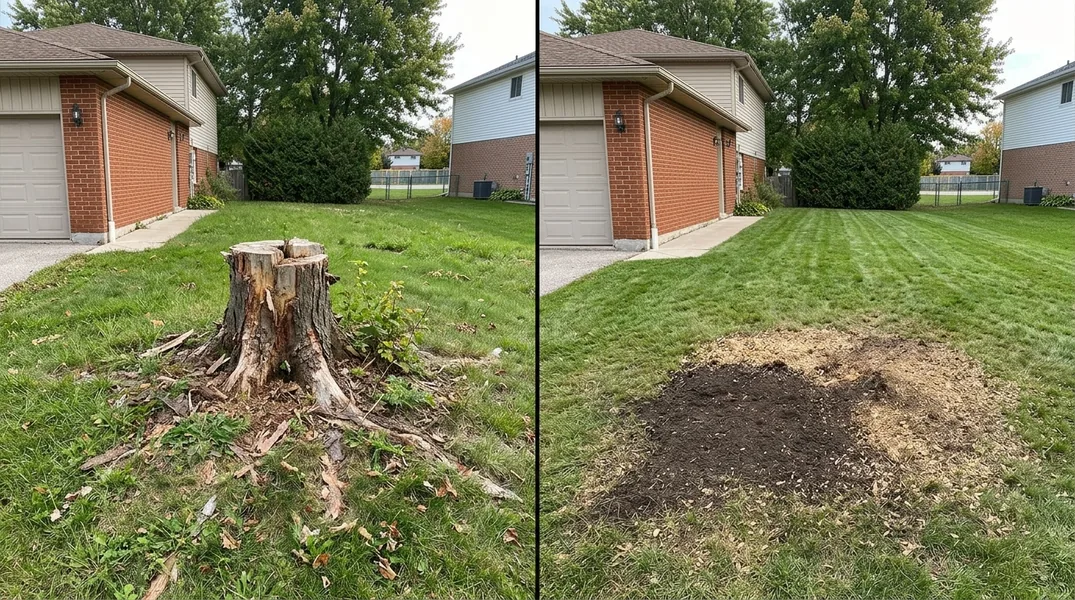
Shoreline properties also sit close to regulated areas, and the practical advice is to plan the work rather than react to it. A tree that has been pruned on a sensible cycle is cheaper to maintain than one that has been left alone for fifteen years and then needs emergency attention. It also produces less debris, which matters when the only access to the bank is a set of stairs. If you want to understand what a maintenance program would cost for your lot, our prices page outlines how we quote, and Stump Grinding can be scheduled in the same visit when a removal leaves a stump behind.
Building a Shoreline Maintenance Plan That Lasts
The properties that hold up best on Kempenfelt Bay are the ones on a cycle rather than a crisis schedule. A typical plan starts with an assessment of every tree within falling distance of the house, the deck and the water access, followed by structural pruning on a three to five year rotation depending on species and exposure. Cedars and spruces get attention for density and wind firmness; maples and oaks get attention for deadwood and included bark. Between visits, the homeowner's job is simple: watch for new lean, soil movement, or mushrooms at the base, and call before the next storm rather than after it.
Barrie Tree Trimming Co. is a local, fully insured company working throughout Letitia Heights (Barrie), Northwest (Barrie), West Bayfield (Barrie) and the communities around the bay. If your lot has sand underfoot, a slope behind the house and a view you would like to keep, the right first step is a walk-through with someone who works these properties regularly. Request a free quote through our estimate form or call (249) 800-0391, and we will tell you what the trees need, what can wait, and what should not.
Looking for a professional in Barrie? Barrie Tree Trimming Co. responds quickly for all your tree trimming needs.
Get a free estimateOur services : Tree Trimming · Tree Removal · Stump Grinding