



Fruit Tree Pruning in Barrie: What Homeowners Should Know
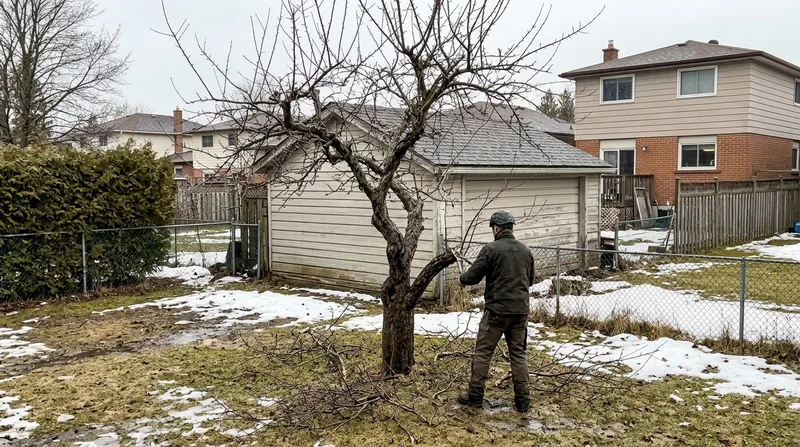
If you own an apple, pear, plum or cherry tree in Barrie, fruit tree pruning in Barrie is the single most useful maintenance task you can schedule. The city's mix of cold winters, heavy clay soils and short growing season means fruit trees need a clear structure to ripen wood and fruit before the first frost. Our ISA Certified Arborists have worked on residential properties across Barrie and the surrounding municipalities since 2013. We focus on late-winter work that opens the canopy, improves airflow and reduces disease pressure. For a broader look at how pruning fits into a full maintenance plan, see our tree pruning service.
Most fruit trees in Barrie neighbourhoods were planted for shade or nostalgia, not for production. That means they often carry crossing limbs, water sprouts and old pruning wounds that never sealed properly. A proper dormant prune resets the framework and gives you a tree you can manage for the next decade.
Why Fruit Trees Need Structural Pruning in Barrie
Fruit trees are not forest trees. Left alone, an apple or plum will grow a dense, upright crown that shades its own fruit, traps moisture and invites fungal problems. In Barrie, the freeze-thaw cycle in late winter and early spring makes poorly structured trees more prone to limb breakage. Pruning during dormancy removes weak wood before it becomes a hazard and directs energy into the fruiting wood you actually want.
- We remove crossing and rubbing limbs that create open wounds and entry points for disease.
- We thin the interior so sunlight reaches the lower canopy and fruit colours evenly.
- We cut out black knot on plums and cherries before it spreads to the main scaffold.
- We reduce height on overgrown trees so you can harvest from the ground.
- We leave the central leader and main scaffolds intact to avoid excessive regrowth.
Each cut is made with a clear reason: light, airflow, structure or disease removal. Nothing is removed just to make the tree smaller.
Key info: A mature apple tree in a Barrie backyard typically needs 45 to 90 minutes of pruning per season. A neglected plum with black knot can take two to three times longer because every infected branch must be cut back to clean wood.
For official guidance on tree care and municipal rules, the in Barrie and the surrounding area Ministry of Natural Resources and Forestry publishes homeowner resources at ontario.ca.
How Our Crews Prune Fruit Trees
We work from the ground up and from the inside out. The first pass is a visual assessment of the tree's structure, previous cuts and disease pressure. The second pass is the actual pruning, done with bypass pruners, loppers and a pole saw where needed. We never use flush cuts or wound paint, and we do not top fruit trees. If a tree is too tall or too damaged to prune safely, we explain the options on site.
- We inspect the trunk, scaffold limbs and root flare for cracks, cankers and old wounds.
- We identify the permanent scaffold branches and remove everything that competes with them.
- We cut out dead, diseased and damaged wood first, then move to structural thinning.
- We thin the fruiting spurs on apples and pears to encourage larger, better fruit.
- We sanitize tools between trees to avoid spreading black knot and other pathogens.
- We chip the pruned material on site or haul it away, depending on your preference.
Every tree is different, so we adjust the intensity of the prune to the species, age and health of the tree in front of us.
Key info: In Springwater and Oro-Medonte, we often find older apple trees that have not been pruned in 15 or 20 years. Those trees usually need a three-year plan: one year to remove dead wood, one year to restore structure, one year to fine-tune fruiting wood.
Pruning Methods We Use
The method depends on the species and the condition of the tree. Apples and pears respond well to spur thinning and renewal cuts. Plums and cherries need more careful timing because of black knot and silver leaf risk. The table below shows the main approaches we use on residential properties.
| Method | Description | Context |
|---|---|---|
| Dormant structural prune | Removes crossing, dead and weak limbs while the tree is fully dormant. | Best for apples, pears and mature plums in late winter. |
| Renewal pruning | Cuts back old scaffolds to stimulate new fruiting wood lower in the canopy. | Used on overgrown trees that are too tall to harvest. |
| Black knot removal | Cuts infected branches 15 to 20 cm below the knot into clean wood. | Essential for plums and cherries in Barrie and surrounding areas. |
| Spur thinning | Reduces the number of fruiting spurs to improve fruit size and reduce biennial bearing. | Applied to apples and pears in healthy condition. |
| Restoration prune | Multi-year plan to rebuild structure on neglected or storm-damaged trees. | Common on older properties in the Barrie area. |
We choose the method that matches the tree, not the one that is fastest. That is why we assess every tree before quoting the work.
Permits, Safety and Debris: What Applies Locally
Fruit tree pruning is a maintenance activity, not a removal, so it rarely triggers a municipal permit. However, if the work requires removing a mature tree, the City of Barrie may require a permit for a private tree removal, and the application is normally supported by an arborist report. Rules and thresholds differ from one municipality to the next across the Barrie area, so we check the local requirements before any removal is discussed. We also respect approach distances near private electrical service entrances. We never touch the public distribution network; a tree touching the public lines is referred to your local utility or Hydro One.
All brush and wood are chipped on site or hauled away. If you want the wood for firewood, we can cut it to length and leave it stacked. We document the work with photos before and after, which is useful if you need to show your insurer that a hazard was addressed.
For properties in the Barrie area that need a formal assessment, our arborist report service covers the documentation side. If the work involves a tree that is already dead or damaged, see our deadwood removal service.
When to Book Fruit Tree Pruning in Barrie
The window for dormant pruning in Barrie runs from late November through early March, depending on the year. We avoid pruning during extreme cold snaps because the wood becomes brittle. Late winter, just before bud break, is the ideal time: the tree is still dormant, the wounds close quickly once growth starts, and the structure is easy to see without leaves. Plums and cherries are best pruned in late winter to reduce the risk of silver leaf and black knot infection.
Summer pruning is limited to light thinning and water sprout removal. It is not a substitute for a dormant structural prune. If you are unsure about timing, call us at (249) 800-0391 and we will tell you what makes sense for your tree.
Key info: A fruit tree pruned in late February in Barrie will push new growth within four to six weeks. The same tree pruned in late April loses energy it cannot recover that season.
We serve Barrie and the surrounding municipalities, including Springwater, Oro-Medonte, Orillia, Severn, Ramara, Tay, Midland, Penetanguishene and Tiny. To see the full list, visit our service areas page. For pricing on pruning and related work, see our pricing page.
Prices Fruit Tree Pruning in Barrie — Indicative pricing
| Service | Price | Details |
|---|---|---|
| Young fruit tree (up to 3 m) | From $150 | Structural prune and shaping for apple, pear, plum or cherry. |
| Mature fruit tree (3 to 6 m) | From $275 | Dormant prune, deadwood removal and canopy thinning. |
| Large or neglected fruit tree (over 6 m) | From $450 | Restoration prune, black knot removal and multi-year plan. |
| Multiple trees on one property | From $120 per tree | Discount applies when three or more trees are pruned in one visit. |
| Travel | Included | In Barrie and the surrounding area. |
| Estimate | Free | Response within 24 hours at (249) 800-0391. |
Indicative prices; free, personalized estimate within 24h at (249) 800-0391.